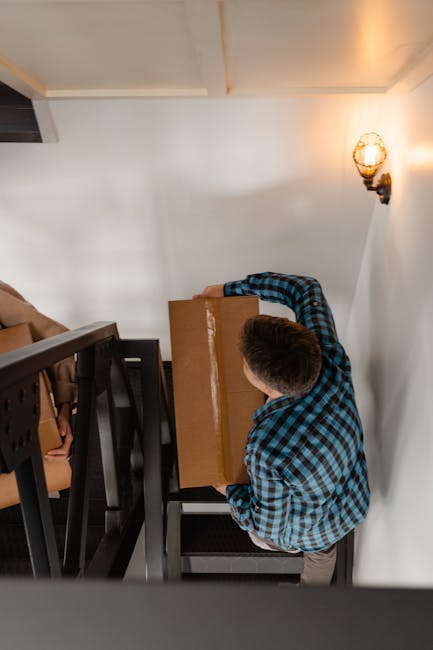
Warwick Avenue Removals Case Study: Top Floor Stair Only Move
Some moves look simple on paper and then, very quickly, the staircase tells a different story. A Warwick Avenue removals case study top floor stair only move is exactly the kind of job that proves why planning matters more than brute strength. When access is limited to narrow stairs, no lift is available, and everything has to come down from the top floor by hand, the difference between a smooth move and a stressful one comes down to preparation, timing, and the right approach.
This guide breaks down how a top-floor, stair-only removal is handled in practice, what usually causes problems, and how to make the process safer and more efficient. If you are comparing moving options, dealing with a flat on an upper level, or trying to work out whether a small removals team or a fuller service is the better fit, this article should give you the clarity you need. And yes, Warwick Avenue adds its own flavour to the job: busy streets, parking constraints, and the general London dance of "where exactly can the van stop?"
- Jump to: Why it matters, How it works, Benefits, Who it is for, Step-by-step guidance, Expert tips, Mistakes to avoid, Tools and resources, Compliance, Comparison table, Case study example, Checklist, Conclusion, FAQs
Why Warwick Avenue removals case study top floor stair only move Matters
A stair-only move matters because the access route is the job. There is no convenient shortcut, no lift to reduce handling, and no room for guesswork if the item is bulky or awkward. On Warwick Avenue, that can mean elegant period conversions, tight stairwells, shared entrances, and parking that is never quite as generous as you hoped. Truth be told, the access often matters more than the number of boxes.
In a top-floor stair-only move, every item has to be judged against the real environment: ceiling height, turns on the staircase, handrail position, front door clearance, and whether larger furniture can safely pass without damage. The wrong assumption can lead to delays, scuffed walls, or the dreaded "we may need to dismantle that" moment. Nobody loves that sentence, but sometimes it saves the day.
This kind of move also matters because it highlights the value of specialist planning. A strong removals team does not just carry things; it anticipates bottlenecks, protects access points, and works out the safest route from the top floor to the van. If you want to understand broader planning standards, it can help to read about our approach to removals and how flat removals are typically handled when access is awkward.
Expert summary: the better the access assessment, the smoother the move. Stair-only jobs are not about speed alone; they are about control, protecting the property, and avoiding unnecessary lifting strain.
How Warwick Avenue removals case study top floor stair only move Works
At a practical level, the process usually begins before moving day. The team needs enough information to judge the staircase, the volume of belongings, and whether any items will need to be dismantled or moved in sections. A good mover will ask specific questions rather than just "how many rooms?" because two rooms with a piano and a shelving system are a very different proposition from two rooms of boxes and soft furnishings.
For a stair-only move, the sequence generally looks like this:
- Pre-move assessment: the mover checks access details, floor level, likely parking position, and item sizes.
- Protective planning: floors, bannisters, door frames, and corners are identified as high-risk points.
- Item preparation: furniture is emptied, wrapped, labelled, or dismantled where needed.
- Loading strategy: lighter items move first, awkward items are scheduled for a clear path, and the team avoids congestion on the stairs.
- Final sweep: the property is checked for forgotten items, loose fittings, and anything that might catch during descent.
On Warwick Avenue specifically, timing and parking can shape the whole move. If the van cannot stop close enough, the walking distance multiplies the effort. If the stairwell is narrow, the team may need a "one item at a time" rhythm. That sounds obvious, but it is often the difference between calm progress and a bottleneck on the landing.
For larger or mixed moves, some customers also combine a stair-only removal with storage. That can be useful if the new property is not ready yet or if you want to reduce what has to come down on the day. In that case, a service such as removals and storage may be worth considering, especially if the move is split across more than one day.
Key Benefits and Practical Advantages
There are several genuine advantages to managing a stair-only removal properly, and they go beyond simply "getting the stuff out." A well-run move reduces stress, protects the building, and helps you stay in control of the day. That sounds neat in theory, but in practice it means fewer surprises and fewer moments where everyone stands on the landing looking at the sofa in silence.
- Better safety: careful lifting and route planning reduce the chance of slips, strains, or dropped items.
- Less property damage: stairs, walls, and doors are protected before movement begins.
- Faster flow: when the team knows the access challenge in advance, the move tends to run more smoothly.
- More accurate quoting: clear access details help avoid unpleasant last-minute changes.
- Less stress for you: the whole job feels more manageable when there is a process.
Another practical advantage is flexibility. Sometimes a top-floor move does not need a large removal lorry full of crew. A smaller, well-organised team may be a better fit. That is especially true for studio flats, one-bedroom properties, or partial moves where small removals make more sense than a full-scale operation.
If you are shifting items into temporary holding space, look at short-term storage or self storage so you do not force a rushed decision on moving day. A little breathing room helps more than people expect.
Who This Is For and When It Makes Sense
This type of move is ideal for anyone living or working in an upper-floor property without lift access. In London, that covers a lot of ground. It could be a renter leaving a third-floor flat, a homeowner moving out of a converted building, or a landlord arranging a property handover after tenants have left furniture behind. Warwick Avenue is a particularly familiar setting for this, because older buildings and compact access are common.
It also makes sense when items are not especially numerous but are awkward to carry. A wardrobe with fixed shelves, a bed base with a tight turn, or a heavy desk can be far more troublesome than a stack of boxes. Let's face it, the stairs usually care more about shape than weight.
Here are the people who usually benefit most:
- Flat owners and tenants on upper floors
- Students moving into or out of compact accommodation
- People downsizing and moving only selected furniture
- Households with limited parking or no lift access
- Anyone needing a careful, efficient move for a tricky building layout
It can also suit customers who are combining a removal with temporary holding space, particularly if they are waiting for decorating, tenancy dates, or refurbishment work. In those cases, a combination of mobile self storage and removals may be more convenient than trying to do everything in one frantic push.
Step-by-Step Guidance
Here is the practical version. Not the glossy brochure version. The real one.
1. Measure the access properly
Do not rely on memory. Measure the staircase width, note any turns or awkward landings, and check whether furniture can tilt safely. If your sofa barely cleared the hall when it came in, it is worth treating that as a clue rather than a challenge.
2. Separate the easy items from the awkward ones
Boxes, soft furnishings, lamps, and small chairs are straightforward. Large wardrobes, beds, desks, mirrors, and white goods need a different approach. The bigger items may need dismantling, and it is better to know that before the van arrives.
3. Clear the staircase and landing
Loose shoes, coats, plant pots, mats, and random bits on the stairs become trip hazards very quickly. Even a tiny obstruction can slow everything down when a bulky item is being carried by two people on a narrow flight.
4. Protect the property
Door frames, bannisters, walls, and corners should be wrapped or padded where needed. This is one of those steps people only appreciate after the fact. It looks like extra fuss at the beginning and looks like a lifesaver by the end.
5. Label and prioritise items
Label boxes by room and importance. Keep essentials separate. If you are moving from a top floor and the day is already physically demanding, finding the kettle or medication quickly matters a lot more than an organised spreadsheet ever will.
6. Use the right vehicle and loading order
A smaller van can sometimes be better than a huge one if parking is constrained or if the route to the property is tight. If the move is local, local removals can make the operation simpler because the travel time is shorter and the schedule is easier to manage.
7. Finish with a final check
Top-floor jobs often leave forgotten items in cupboards, behind doors, or on high shelves. Do one last room-by-room sweep before the team leaves. It saves a second trip. Usually.
Expert Tips for Better Results
Over the years, one thing becomes very clear: the best stair-only moves are not necessarily the quickest ones at the start, but the smoothest ones overall. A few good habits help a lot.
- Ask for an access conversation, not just a price: a proper quote depends on the stair layout, not only volume.
- Empty furniture before moving day: drawers, books, and loose contents add weight and make handling awkward.
- Plan for parking in advance: on roads like Warwick Avenue, this can save more time than any packing trick.
- Keep one essentials bag aside: chargers, documents, keys, snacks, and water should not be buried in a box mountain.
- Be honest about bulky furniture: if something is borderline, say so early. No one enjoys a surprise on the landing.
One small but useful detail: if you have mirrors, framed art, or awkward lamps, keep them together and clearly marked. Fragile items can get lost in the general rush. Also, if you are moving a home office, it is smart to keep important papers separate and consider document storage for anything you do not want bouncing around in transit.
A bit of common sense goes a long way here. Sometimes the smartest move is the boring one. Measure, wrap, label, check. Boring? Maybe. Effective? Absolutely.
Common Mistakes to Avoid
Most problems in a stair-only move are predictable. That is the frustrating part. The good news is that predictable problems can be avoided fairly easily.
- Underestimating the access: a staircase may look manageable until a bulky item meets the first bend.
- Not measuring furniture: assuming a wardrobe will fit through a turn is a classic mistake.
- Poor timing: trying to move during peak traffic or when parking is hardest can create avoidable delays.
- Skipping packing prep: loose contents make furniture heavier and less stable.
- Leaving the route cluttered: even small obstacles can cause frustration and risk.
- Forgetting the weather: rain and damp stairs are not a fun combination. Not remotely.
Another common issue is choosing the wrong type of service. If you only need a few items moved from a top-floor flat, a smaller vehicle and team may be perfect. If you are moving a full household with storage involved, something more comprehensive may be better. When the scale changes, the service should change with it.
For more demanding or layered moves, think carefully about whether house removals or a combined solution is more appropriate. Sometimes a stair-only apartment move is just one part of a bigger transition.
Tools, Resources and Recommendations
You do not need specialist kit for every move, but the right tools make the job much calmer. They also reduce the temptation to muscle through something awkward and hope for the best. That approach tends not to age well.
| Tool or resource | Why it helps | Best used for |
|---|---|---|
| Furniture blankets | Protects wood, fabric, and painted surfaces | Wardrobes, tables, and larger boxed items |
| Straps and grips | Improves control on stairs | Heavy or awkward items |
| Labels and markers | Keeps boxes organised and easier to place | Room-by-room packing |
| Door and corner protection | Reduces accidental knocks and scrapes | Narrow hallways and stairwells |
| Storage option | Gives flexibility if dates do not line up | Staggered move plans |
Recommended services depend on the shape of the move. If you are relocating a flat with awkward access, flat removals are often the right starting point. If you need help getting packed before the day, packing services can save a lot of strain. And if the move is only a small load, man and van can be a practical fit.
For items you are not ready to take straight into the new property, secure storage gives breathing space without clogging up hallways or spare rooms. That can be especially handy in London, where living space is already doing its best impression of being compact.
Law, Compliance, Standards, or Best Practice
For a stair-only removal, the main compliance considerations are around health and safety, safe lifting, property protection, and clear responsibility. The exact requirements can vary depending on the circumstances, but the general expectation in the UK is straightforward: work should be carried out safely, sensibly, and with proper care for both people and property.
That means using appropriate manual handling practices, avoiding unsafe loads, and not attempting to force items through access routes that are too tight. It also means being clear about insurance and what is covered in the event of accidental damage. If you are comparing providers, it is worth reviewing their insurance and safety information before booking.
Best practice also includes honest quoting. A mover should ask about stair counts, access restrictions, and awkward furniture. If they do not, that is a little worrying. Not necessarily disastrous, but a bit of a red flag. Transparent pricing and realistic expectations are part of a well-run move, which is why reading about pricing and quotes can help you understand how the job is assessed.
If you are arranging a move for a business or moving files and equipment, the needs can differ. In those cases, office removals or business storage may be more relevant than a home-focused setup.
Options, Methods, or Comparison Table
Not every top-floor move should be handled the same way. The right method depends on volume, access, urgency, and how much support you want on the day.
| Method | Best for | Pros | Watch out for |
|---|---|---|---|
| Full removals team | Larger flats or full household moves | More hands, better for heavy furniture, smoother pacing | Can be more than you need for a small job |
| Man and van | Smaller loads, local moves, quick turnarounds | Flexible, cost-effective, usually easier to schedule | Limited capacity if you have many bulky items |
| Removals and storage | When dates do not align or you need breathing room | Reduced pressure, more flexible timing | Extra planning needed for what goes where |
| Self storage first | Staggered moves or temporary decluttering | Useful if you are moving in stages | Requires you to handle more of the logistics yourself |
For many Warwick Avenue flats, the best answer is a practical middle ground: enough support to handle the stairs properly, but not so much overhead that the move becomes over-engineered. If you are unsure, a smaller local team is often the best starting point, especially when access is the main issue rather than volume.
Case Study or Real-World Example
Here is a realistic example of how a stair-only move can unfold.
A customer in a top-floor Warwick Avenue flat needed to move out with a bed frame, mattress, compact sofa, dining table, two chairs, and around twenty boxes. The property had no lift, a narrow staircase, and a front entrance that made parking awkward if the van was too far away. The customer had already dismantled some smaller shelving, which helped.
The moving plan was simple but effective:
- The crew checked the access route before carrying anything down.
- The mattress and soft items were moved first to clear space.
- The table was protected and carried with a steady two-person lift.
- The bed frame was dismantled further because the landing turn made it risky as one piece.
- Boxes were grouped by weight so the stairs were not overloaded with heavy loads all at once.
The useful part was not just that the move happened. It was that the customer did not feel rushed, the walls stayed protected, and the whole thing was paced in a way that matched the building. That is the real lesson with stair-only removals: the best outcome usually comes from slowing down just enough to get it right.
In this sort of move, details like whether a bookshelf can be carried upright, whether a lamp shade needs separate wrapping, or whether the mattress needs a second pair of hands all matter. Small things. But then again, small things are often what decide whether a move feels chaotic or under control.
Practical Checklist
Use this checklist before the move starts. It keeps things grounded when the day gets busy.
- Confirm the floor level and stair access
- Measure bulky furniture and major doorways
- Check parking and van access near the property
- Empty drawers, wardrobes, and storage furniture
- Label boxes by room and priority
- Wrap fragile items separately
- Clear stairs, landings, and hallways
- Protect bannisters, corners, and door frames
- Keep essentials in a separate bag
- Review insurance and safety information
- Decide whether storage is needed
- Do a final room-by-room check before departure
If you are moving in stages, it may also be worth considering long term storage if items will stay out of the property for a while. For students or temporary residents, student storage can also be a smart fit when terms, travel plans, or accommodation dates do not line up neatly.
Get a free quote today and see how much you can save.
Conclusion
A Warwick Avenue removals case study top floor stair only move is a good reminder that moving is rarely about lifting alone. It is about access, sequencing, safety, and making sensible decisions before the first box moves. When a stairwell is tight and the route is long, success depends on preparation more than anything else.
If you remember only one thing, make it this: the more accurately you plan the access, the less stressful the day becomes. That applies whether you are moving one room, a whole flat, or a mixed load with storage involved. A careful approach usually saves time in the end, even if it feels slower at the start.
And honestly, that is often the best kind of move: not flashy, not dramatic, just calm, competent, and finished with everyone still speaking to each other. A small win, but a real one.
Frequently Asked Questions
What does a top floor stair only move mean?
It means the property has no lift access and all items need to be carried down or up stairs by hand. These moves require careful planning because the staircase becomes the main access route.
Why is Warwick Avenue tricky for removals?
Warwick Avenue often involves London parking constraints, shared entrances, and period buildings with narrow stairs. Those features can make even a small move more complex than expected.
Do I need a full removals team for a stair-only flat move?
Not always. If the load is small, a compact team or man and van setup may be enough. Larger flats or heavy furniture usually benefit from more hands.
Can furniture be moved down narrow stairs safely?
Yes, often it can, but only if the items are measured properly and the route is assessed first. Some pieces need dismantling, wrapping, or a different carrying technique.
What should I measure before booking?
Measure the staircase width, turns on the landing, key doorways, and the size of large furniture. If in doubt, measure the item at its widest point, not just the body of it.
How do I avoid damage to walls and bannisters?
Protective blankets, corner guards, and careful route planning help a lot. It also helps to clear the stairs completely before the move begins.
Is storage useful for a stair-only move?
Very often, yes. If your move dates do not line up or you need to reduce pressure on the day, removals and storage or standalone self storage can make things easier.
How far in advance should I arrange the move?
As early as you can, especially for London properties where parking and timing matter. Early planning gives you more choice and reduces the chance of a rushed, awkward day.
What items are most difficult in a stair-only move?
Wardrobes, bed frames, large sofas, desks, mirrors, and white goods are usually the hardest. Their shape matters as much as their weight.
What if I have only a few items to move?
Then a smaller, more flexible service may be the best fit. Small removals are often ideal for a few bulky pieces or a light flat move.
Do movers need to know about insurance and safety?
Yes. It is sensible to ask how the team handles safety and what cover is in place. For awkward access jobs, transparency matters because the risk profile is a little different.
Can a stair-only move work for office items too?
Absolutely. Small office setups, files, and compact furniture can often be moved this way. If it is a larger business relocation, office removals or office storage may be more suitable.
What is the best next step if I am not sure what service I need?
Start by listing the biggest items, the floor level, and any access issues. From there, compare whether a straightforward removal, storage option, or combined service best matches the move. A clear picture at the start saves a lot of back-and-forth later.